
Article
A fishery outpacing its safeguards
Author
Andrea Kavanagh
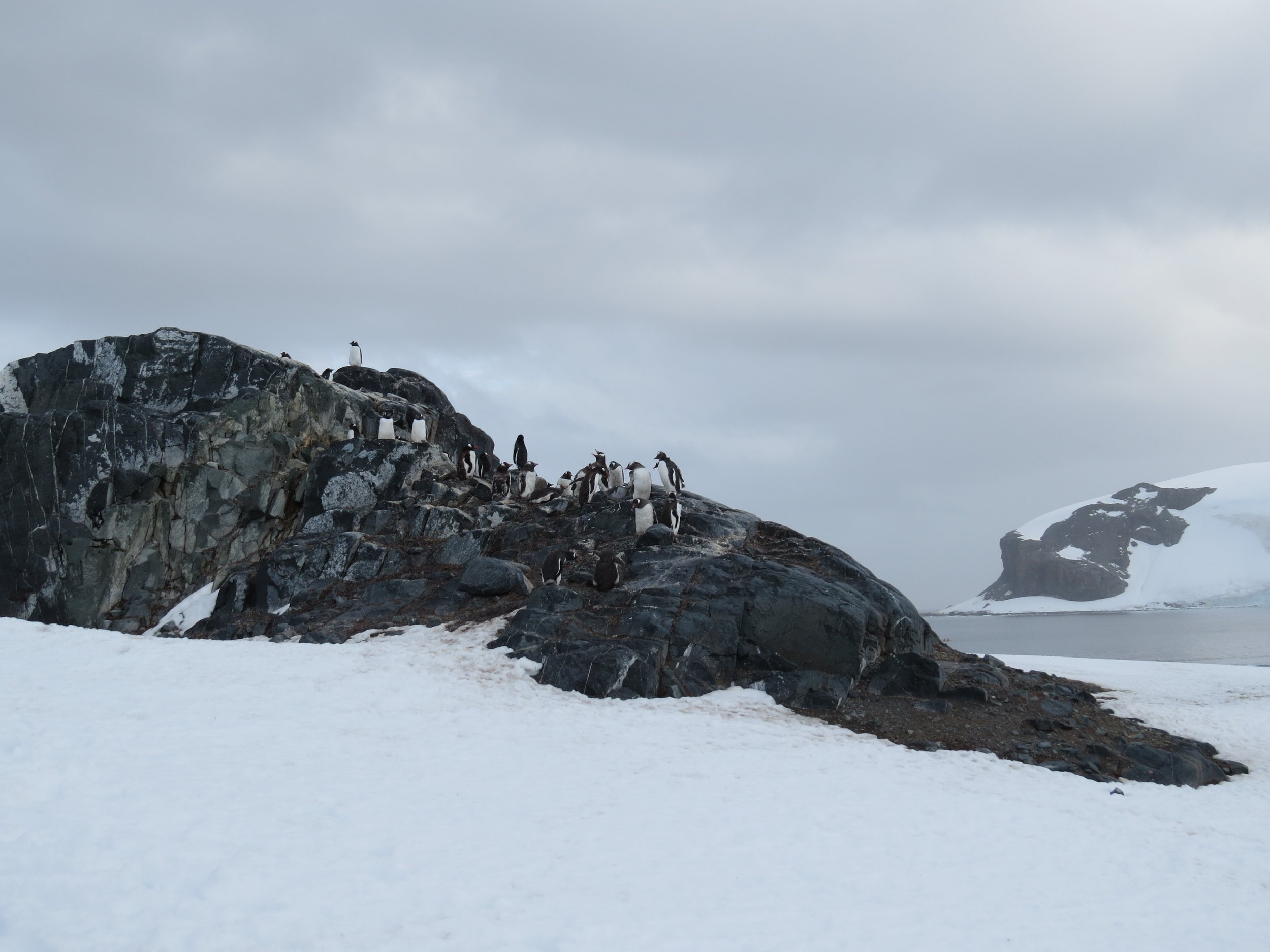
Antarctic krill are the foundation of the Southern Ocean food web. Whales, penguins, seals, seabirds, and fish all depend on krill for survival. But today, industrial fishing pressure is increasing in some of the most wildlife-rich waters around the Antarctic Peninsula at the same time the region is warming rapidly from climate change. [1,2,3,4]
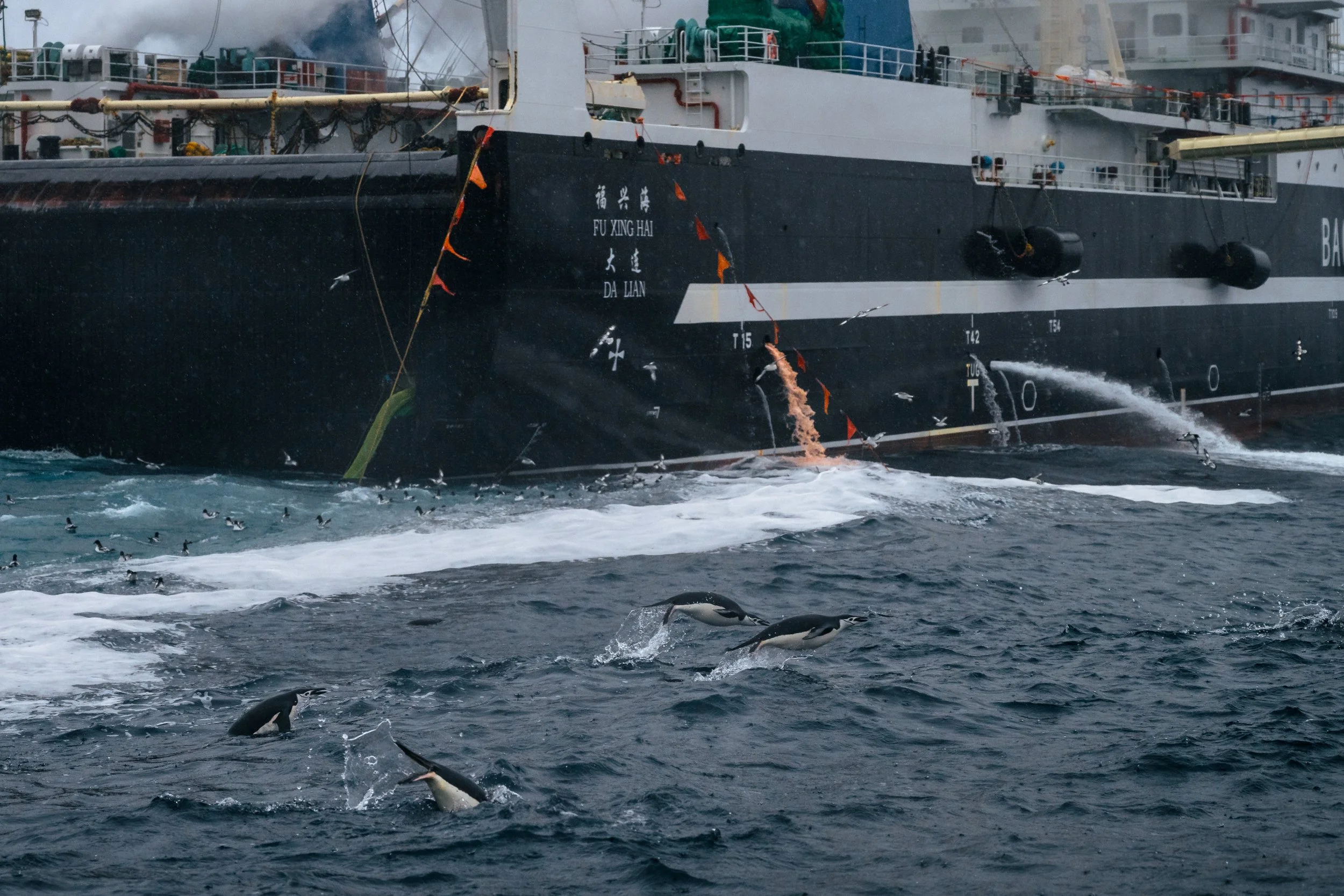
The Antarctic krill fishery is concentrated primarily in CCAMLR Area 48 around the Antarctic Peninsula and Scotia Sea. Modern factory vessels use continuous pumping systems that allow nets to remain submerged for long periods while krill are vacuumed aboard and processed directly on the vessel. [5]
Most Antarctic krill are not harvested for global food security. Krill are primarily processed into:
omega-3 dietary supplements,
aquaculture feed ingredients,
salmon feed,
shrimp feed,
and pet food products [6,7,8]
One of the fastest-growing uses of Antarctic krill is industrial salmon aquaculture. Krill meal and krill oil are marketed as premium feed ingredients because they can improve pigmentation, omega-3 content, feed efficiency, palatability, and fish health in farmed salmon and other aquaculture species. [7,8]
The primary fishing nations in recent years have included:
Norway,
China,
South Korea,
Chile,
and Ukraine [9]
Norwegian companies have historically dominated the fishery, while China has significantly expanded its Antarctic krill fleet and processing ambitions over the last decade.
The management crisis
The Commission for the Conservation of Antarctic Marine Living Resources (CCAMLR) manages the Antarctic krill fishery using a precautionary, ecosystem-based framework. [10]
While the overall precautionary catch limit for Area 48 is 5.61 million tonnes, fishing was capped at a 620,000-tonne trigger level unless catches were distributed more precautionarily across smaller management units. [11,12]
Those finer-scale protections were designed to reduce concentrated fishing pressure near whale, penguin, and seal feeding grounds.
But in 2024, CCAMLR members failed to reach consensus on replacement spatial management measures before Conservation Measure 51-07 expired. [12]
In 2025, the fishery reached the 620,000-tonne trigger level and closed early for the first time in its history. [13,14]
Scientists have repeatedly warned that concentrated fishing pressure near predator feeding areas can create localized ecosystem impacts even when overall catches remain below broad precautionary limits. [2]
A 2020 Scientific Reports study estimated:
a 64% probability that penguins had already experienced poor performance linked to localized fishing pressure over the previous 30 years,
and a 77% probability of poor future performance if warming and concentrated fishing continue. [2]
Climate change and wildlife conflict
The Antarctic Peninsula is among the fastest-warming regions on Earth. [3,4,15]
Scientists warn that:
warming waters,
declining sea ice,
ocean acidification,
changing krill distribution,
and industrial fishing
are creating cumulative pressures on krill-dependent wildlife. [3,4,15]
Researchers documented commercial krill fishing operating within a supergroup of foraging fin whales in the Southern Ocean in 2023.16 A 2024 Nature Communications paper warned of an emerging human-wildlife conflict between recovering baleen whales and the expanding krill fishery. [1]
How MPAs could help
CCAMLR committed more than two decades ago to establish a representative network of Southern Ocean marine protected areas (MPAs). [17]
The proposed Antarctic Peninsula MPA could:
protect important whale and penguin foraging areas,
safeguard krill spawning and nursery habitat,
reduce concentrated fishing pressure,
and improve ecosystem resilience to climate change. [18]
But despite years of scientific work and international support, consensus paralysis inside CCAMLR has repeatedly blocked adoption.
The MSC Certification Controversy
Despite unresolved management failures and the expiration of key spatial safeguards, the Marine Stewardship Council (MSC) renewed certification of the Antarctic krill fishery.
Critics argue the certification no longer reflects a genuinely precautionary fishery because:
key ecosystem safeguards have weakened,
fishing pressure is increasingly concentrated,
MPAs remain stalled,
and climate-related ecosystem risks are intensifying. [1,2,3,4,12]
The certification also has implications far beyond the krill industry itself.
MSC-certified krill products can be used in aquaculture supply chains that support Aquaculture Stewardship Council (ASC) certifications for farmed seafood products, including salmon. As a result, Antarctic krill harvested from an increasingly controversial fishery can become embedded within broader “sustainable seafood” certification systems and retailer sourcing claims.
This creates a powerful market incentive to maintain MSC certification even as scientific and governance concerns intensify.
In 2026, the Antarctic and Southern Ocean Coalition (ASOC) and World Wildlife Fund (WWF) formally objected to MSC recertification, arguing that ecosystem risks and weakened safeguards were not adequately addressed. [19]
The controversy raises a broader question:
Can a fishery still be considered sustainable when the political system responsible for preventing ecosystem harm is no longer functioning precautionarily?
Call to action
Until meaningful precautionary safeguards are restored, consumers, retailers, investors, seafood companies, and aquaculture producers should reconsider supporting products linked to the Antarctic krill fishery — including krill oil supplements, krill-based pet products, and farmed seafood supply chains that rely on krill-derived feed ingredients. Retailers, investors, certification bodies, seafood buyers, and aquaculture companies should reassess sustainability claims that depend on outdated or weakened safeguards.
These safeguards should be in place before Antarctic krill and krill-derived products can credibly be considered sustainable again:
CCAMLR members should:
restore and strengthen precautionary spatial management,
adopt long-delayed marine protected areas,
protect key predator foraging areas and krill nursery habitat,
incorporate climate change and whale recovery into management decisions,
and improve transparency and independent monitoring.
The Southern Ocean is already under growing pressure from climate change, sea-ice loss, and industrial fishing.
Antarctic wildlife cannot afford continued delay.
Outside pressure helped transform the illegal toothfish fishery in the Southern Ocean decades ago.
It is time for consumers, scientists, retailers, investors, and civil society to demand the same accountability for Antarctic krill.
References
1. Savoca, M.S. et al. (2024). Nature Communications 15:7708.
2. Watters, G.M., Hinke, J.T., & Reiss, C.S. (2020). Scientific Reports 10:2314.
3. Flores, H. et al. (2012). Marine Ecology Progress Series 458:1–19.
4. Kawaguchi, S. et al. (2024). Nature Reviews Earth & Environment 5:43–58.
5. Nicol, S. et al. Antarctic krill fisheries and continuous pumping technology literature.
6. Aker BioMarine. The Krill Advantage.
7. The QRILL Company. QRILL Aqua product materials.
8. Naylor, R. et al. (2021). Nature.
9. CCAMLR Statistical Bulletin and catch datasets.
10. Convention on the Conservation of Antarctic Marine Living Resources (1980).
11. CCAMLR Conservation Measure 51-01.
12. CCAMLR Conservation Measure 51-07 and related management discussions.
13. Associated Press. Krill fishery in Antarctica shut down after record catch triggers unprecedented early closure. 2025.
14. CCAMLR Fishery Report 2025: Euphausia superba in Area 48.
15. Klein, E.S. et al. (2018). PLOS ONE 13:e0191011.
16. Pallin, L.J. et al. (2023). Ecology 104:e4002.
17. CCAMLR General Framework for Marine Protected Areas.
18. CCAMLR Domain 1 Marine Protected Area proposal documents.
19. Antarctic and Southern Ocean Coalition (ASOC). Antarctic Coalition Objects to MSC Certification of Antarctic Krill Fishery. 2026.