

Article
How to Avoid Krill Products
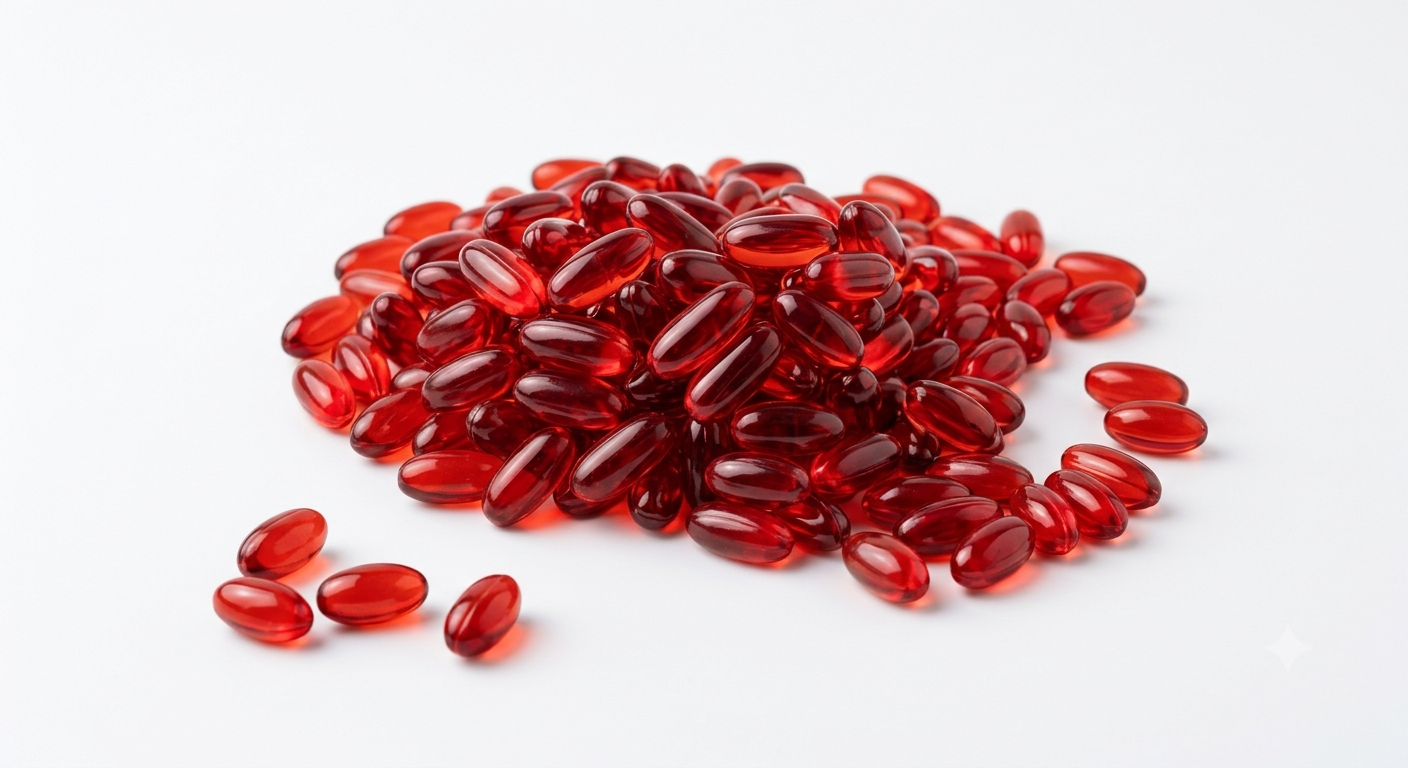
Antarctic Krill on Retail Shelves
Here’s the scoop on krill products: you don’t need them.! Antarctic krill are vacuumed up from the Southern Ocean with industrial precision mainly for 3 products:
Omega-3 Supplements - Krill oil omega-3 capsules advertised for human health
Food for Farmed Salmon- the pigment in krill gives the farmed salmon’s flesh a pink color
Pet food- krill may be used as fish food, as an additive to dog and cat food, and as a pet omega-3 supplement
But, here’s the industry’s secret: krill products are completely unnecessary. Krill are food for Antarctic wildlife, not us. Omega-3s can be obtained through a nutritious diet alone, and whether there are any significant health benefits of simply adding a supplement is scientifically unclear at best [1,2,3]. Omega-3 supplements may even cause harm to your health due to the industrial manufacturing process [4]. However, for those who desire additional supplementation, plentiful ocean-friendly omega-3 supplement alternatives exist including:
Algae oil
Flaxseeds, chia seeds, and hemp seeds and their oils
Walnuts
In fact, here’s krill’s secret: they get their omegas from algae, too! Krill feed on algae, so by taking algal oil supplements, you skip the middleman and go straight to the source. Algae oil is packed with EPA and DHA and is just as viable as fish oil if not even more nutritious, [5,6,7,8,9] and of course it is ocean and Antarctica friendly.
Skip the Krill
Many krill supplements are clearly labeled as “Antarctic Krill Oil” while others may be labeled as simply “Krill Oil”. If a supplement is called “Krill Oil”, check the packaging for the mention of Antarctica. The registered trademarks NKO®, Superba®, K-Real®, and Eco-Harvesting® are also indicative of the Antarctic krill industry. AWA encourages you to skip krill all together and stick to ocean-friendly alternatives like algae oil!
Ready to take action?
Krill oil supplements are currently sold at all of the following U.S. major retail chains. Click each link to see the products:
Many krill oil products originate from Aker BioMarine, a Norwegian company that operates a processing factory in the U.S. Products also originate from Chinese, Korean, Chilean, and Ukrainian krill fisheries. Krill oil supplements from all krill oil producers can be found under a multitude of brands, including:
MegaRed (Schiff Vitamins)
Ask corporate retailers to stop selling krill products!
Who doesn’t sell krill?
A major U.S. retailer where you won’t find these products is Whole Foods! Due to strict sustainability standards and concerns over the impact on marine ecosystems, Whole Foods discontinued the sale of all krill oil and related dietary supplements back in 2010. [10] Across the globe, other retailers are taking notice. Since 2025, four European retailers have dropped krill products from their shelves due to environmental concerns. [11,12,13,14] Antarctic Wildlife Alliance is asking all U.S. retailers to follow suit and discontinue sales of krill products.
What about farmed salmon and pet food?
There is a lack of transparency in these supply chains. When salmon are farmed, their food-such as krill- may still be wild caught, perpetuating intense pressure on wild fish and krill stocks. We at AWA are currently working to better understand salmon and pet food supply chains in order to educate consumers, and we will update you as we progress. In the meantime, we kindly suggest you Skip the Salmon, too!
References
1.https://www.nytimes.com/2026/07/08/well/mind/omega-3s-supplements-benefits-brain.html
2. https://www.health.harvard.edu/brain-health/dont-buy-into-brain-health-supplements
3.https://www.nationalgeographic.com/health/article/omega-3s-fish-oil-supplements
4. https://www.health.harvard.edu/heart-health/the-false-promise-of-fish-oil-supplements
5.Kunj, P., Sahu, S., Singh, G., & Arya, S. K. (2025). A review on algal oils as a sustainable source of essential omega-3 fatty acids. Bioresource Technology Reports, 30, 102154.
6. Winwood, R. J. (2013). Algal oil as a source of omega-3 fatty acids. In Food enrichment with omega-3 fatty acids (pp. 389-404). Woodhead Publishing.
7. Ryan, L., & Symington, A. M. (2015). Algal-oil supplements are a viable alternative to fish-oil supplements in terms of docosahexaenoic acid (22: 6n-3; DHA). Journal of functional foods, 19, 852-858.
8. Ryckebosch, E., Bruneel, C., Termote-Verhalle, R., Goiris, K., Muylaert, K., & Foubert, I. (2014). Nutritional evaluation of microalgae oils rich in omega-3 long chain polyunsaturated fatty acids as an alternative for fish oil. Food chemistry, 160, 393-400.
9. Adarme-Vega, T. C., Thomas-Hall, S. R., & Schenk, P. M. (2014). Towards sustainable sources for omega-3 fatty acids production. Current opinion in biotechnology, 26, 14-18.
11. https://www.seashepherdglobal.org/latest-news/retailer-drops-all-sales-of-krill-products/
12. https://www.seashepherdglobal.org/latest-news/dm-drops-krill/
13. https://www.seashepherdglobal.org/latest-news/german-drugstores-drop-krill/
14. https://www.seashepherdglobal.org/latest-news/alnatura-krill-free-grocer/