
New Maps Show Intensified Krill Fishing in Antarctic Penguin and Seal Feeding Areas After Protections Lapsed
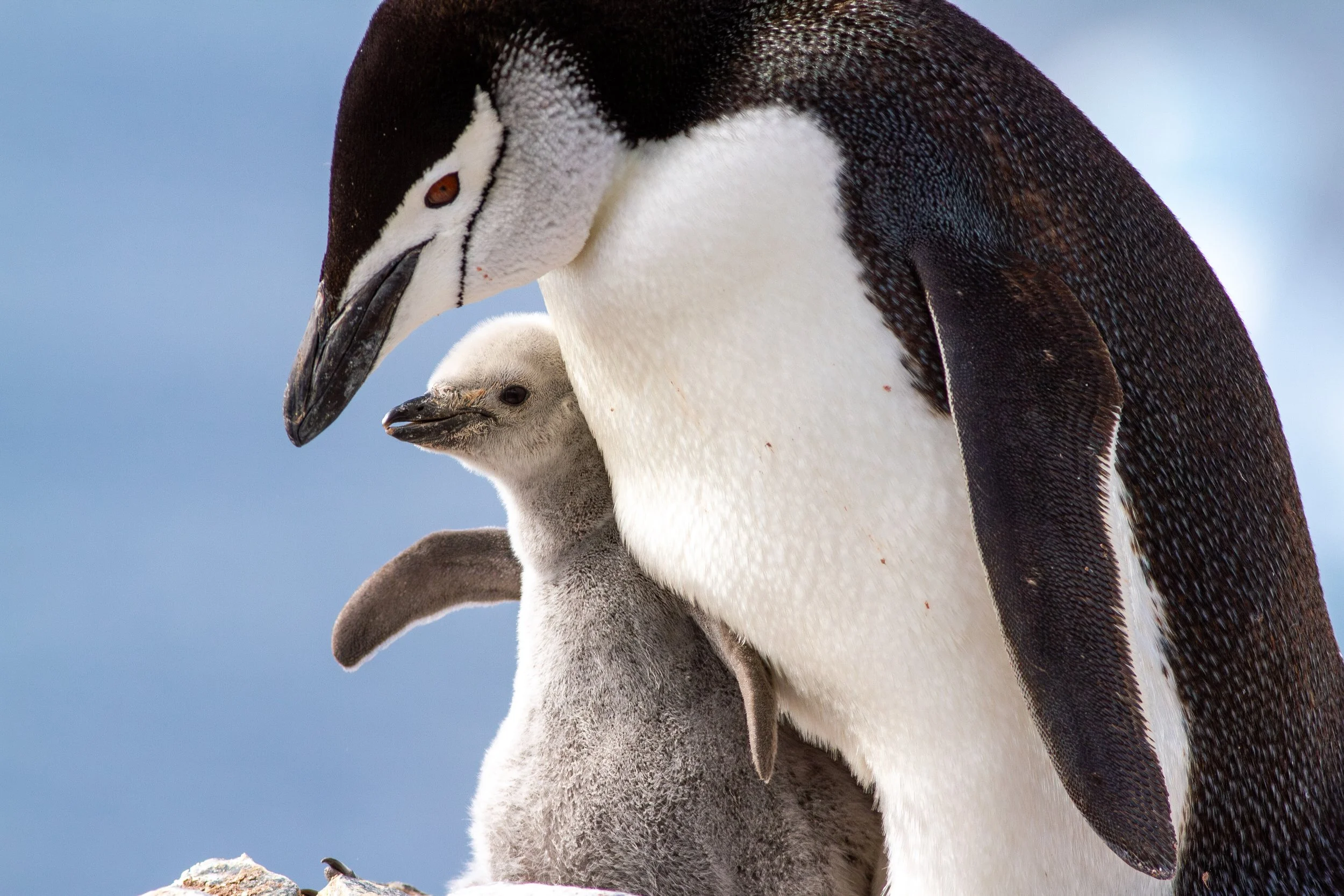
Chinstrap penguin adult and chick.
New maps produced through a collaboration between Antarctic Wildlife Alliance and Global Fishing Watch reveal a troubling increase in industrial krill fishing activity within penguin and seal foraging areas around the northern Antarctic Peninsula after a key conservation measure (CM 51-07) expired in 2024.
Antarctic Wildlife Alliance and Global Fishing Watch collaborated this summer to analyze the intensity of krill fishing in the Antarctic peninsula, and the results of our analysis illustrate an enormous concern: krill fisheries are overlapping with important predator breeding grounds at almost all times. Based on our research, apparent krill fishing activity within these critical wildlife feeding areas increased by about 138% in winter, while summer fishing activity within estimated crabeater seal foraging areas increased by 53%. This raises serious concerns about the consequences of allowing fishing to intensify where Antarctic wildlife depends on krill for survival.
The findings come as the Commission for the Conservation of Antarctic Marine Living Resources (CCAMLR), the international body responsible for managing Antarctic fisheries and protecting Southern Ocean ecosystems, meets in Hobart, Tasmania. CCAMLR-45 hot topics of conversation include (1) restoring the spatial distribution of the krill fishery and (2) creation of an MPA around the the northern Antarctic Peninsula (D1MPA). We’ve shared our findings with CCAMLR participants, and we hope CCAMLR states will take them under consideration.
BACKGROUND: WHY CM 51-07 MATTERED
There is a 620,000 metric tonne annual catch limit for Area 48.1 (the northern Antarctic Peninsula), which represents just 1% of the estimated krill biomass in all of Area 48.1. The Antarctic krill industry and supporters use this 1% statistic to qualify their fishery as ‘sustainable’, but a crucial distinction is that the catch limit is taken from very small spots within the greater Area 48.1. For years, CCAMLR Conservation Measure 51-07 further divided the 620,000-tonne regional krill trigger level among smaller fishing subareas. The purpose was to reduce the risk that fishing would concentrate too heavily in the places where predators depend on krill. CCAMLR failed to renew the measure in 2024, leaving the trigger level without those subarea allocations from the 2025 fishing season onward. The AWA–GFW maps show why this loss of spatial safeguards is so consequential: apparent fishing activity has intensified in key estimated feeding areas around the northern Antarctic Peninsula. This area is a breeding and feeding hotspot for whales, penguins and seals, so the highly concentrated catch can cause a phenomenon called ‘localized depletion’ wherein the area in certain predators’ home ranges does not have enough krill to support the animals feeding there after tens of thousands of tonnes are vacuumed up by commercial supertrawlers. This can cause animals to starve. We are facing an ecological emergency.
Penguins in Area 48.1: Northern Antarctic Peninsula
The maps of krill vessel activity in wintertime penguin foraging areas in the northern Antarctic Peninsula are striking. Apparent fishing hours within estimated foraging areas for Adélie, chinstrap, and gentoo penguins total approximately 9,589 hours annually before CM 51-07 expired, and approximately 22,819 afterward. In summer, the charts also indicate increased overlap: within the mapped chinstrap penguin foraging zone, for example, annual apparent fishing hours rise from about 3,092 to 6,295.
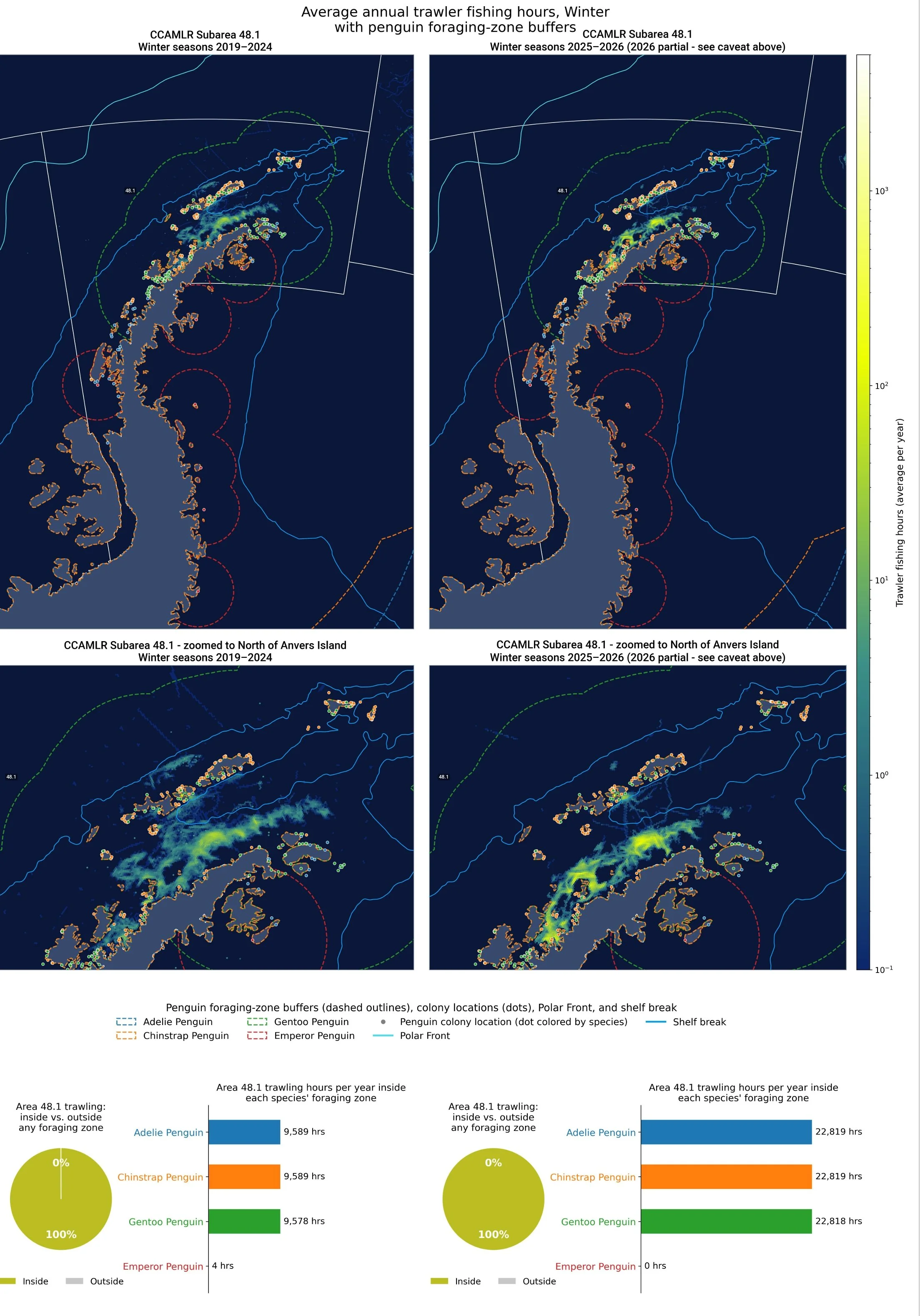
Estimated annual apparent krill fishing hours (green blobs) in CCAMLR Subarea 48.1 around penguin colonies (dots) and penguin foraging areas (dashed line zones) in the austral winter, both before and after CM 51-07 lapsed. Dashed outlines show literature-derived potential predator foraging ranges—not observed animal positions. The post-2024 period includes partial 2026 data. Note that 100% of fishing activity was taking place in estimated penguin foraging zones even when the catch was spatially distributed, but total trawling hours were less.
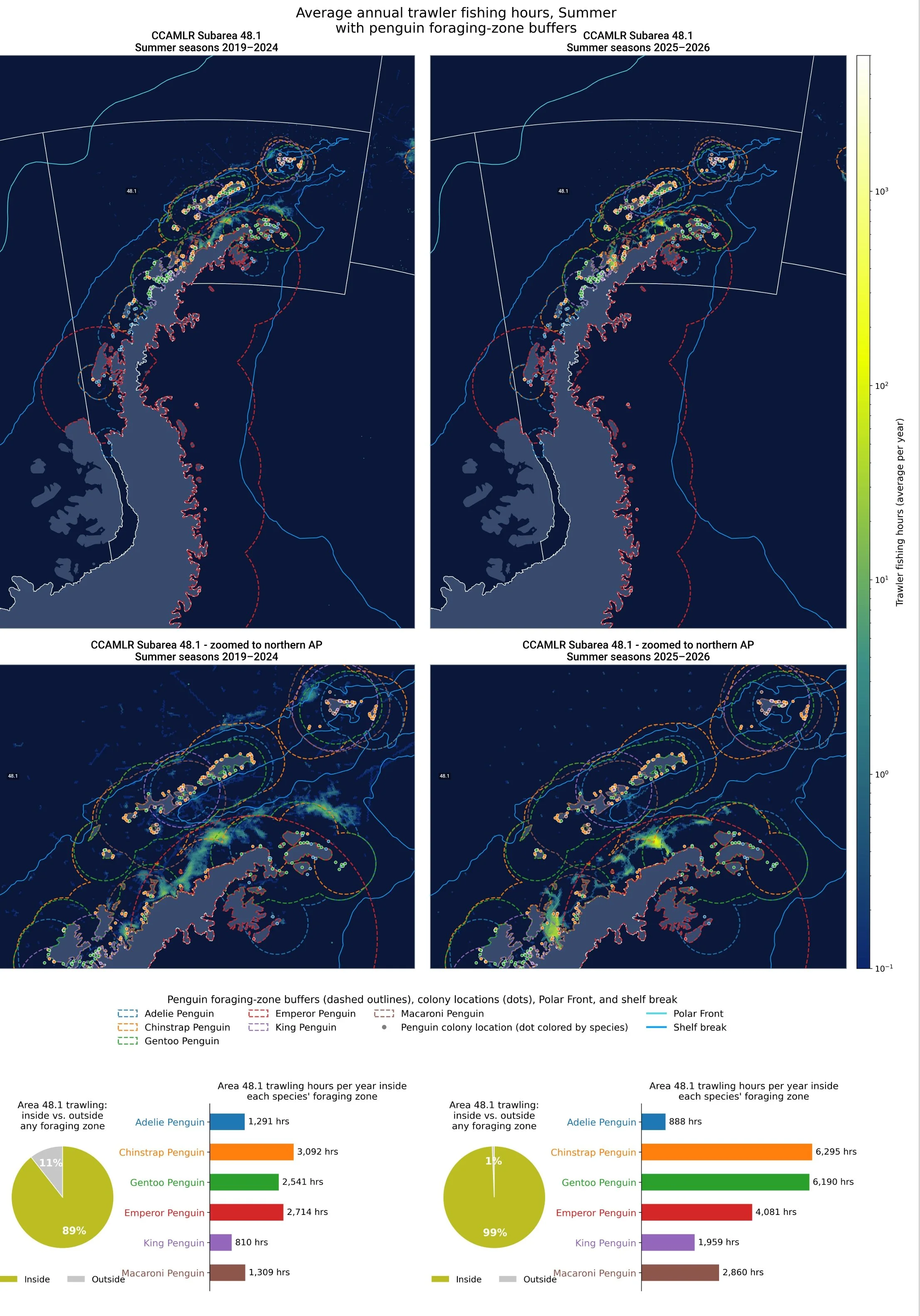
Estimated annual apparent krill fishing hours (green blobs) in CCAMLR Subarea 48.1 around penguin colonies (dots) and penguin foraging areas (dashed line zones) in the austral summer, both before and after CM 51-07 lapsed. Dashed outlines show literature-derived potential predator foraging ranges—not observed animal positions. The post-2024 period includes partial 2026 data
These species rely heavily on krill, especially at important stages of breeding and chick provisioning. Chinstrap penguins almost exclusively eat krill, which is why we’re already seeing populations collapsing due to krill shortages. Krill is also a key part of Adélie penguin and macaroni penguin diets- and we’re also seeing Adélie numbers decline due to krill shortages, and macaroni penguins were deemed Vulnerable by the IUCN. Gentoo, emperor, and king penguins tend to be more generalist feeders and may not eat as much krill regularly, but they remain dependent upon a food chain that depends upon krill (e.g. eating silverfish that eat krill).
The concentration of effort during winter deserves particular emphasis, because changes in seasonal habitat use and prey access can affect predators differently throughout the year. Wintertime foraging habitat is important; when the summertime breeding season for most penguins ends, they can travel much farther from their colonies to forage because they do not need to return to the colony to feed their chicks between trips.
Our analysis did not determine actual vessel and wildlife encounters, nor can we definitively prove declines in local krill availability with the existing data, but we know that encounters happen (e.g. Ryan et al. 2023, Bahlberg et al. 2025) and these figures distinctly illustrate how fishing effort has intensified in places identified as predator feeding habitat. The fact that much of the fishery overlapped estimated foraging zones even before CM 51-07 expired reinforces the need for stronger safeguards, not just the reinstatement of previous catch allocations.
Seals in Area 48.1: Northern Antarctic Peninsula
The seal maps tell a similar story. In Subarea 48.1, the annual apparent fishing hours inside the estimated winter crabeater seal foraging area increased from about 9,589 to 22,819. In summer, activity within the mapped crabeater seal area rose from approximately 4,590 to 7,011 hours.
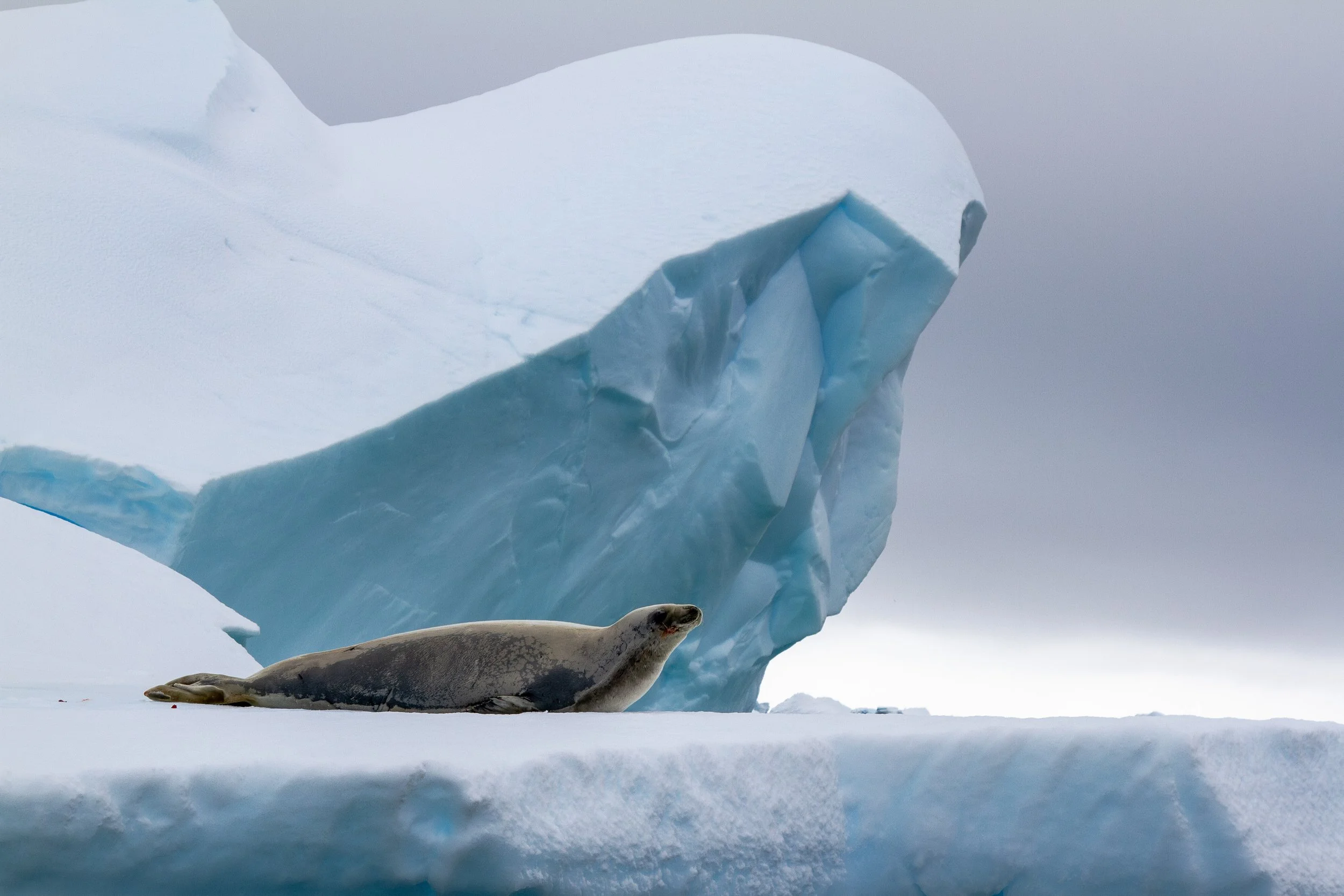
Crabeater seal.
Crabeater seals and Antarctic fur seals are the two Antarctic seal species that almost exclusively eat krill. Antarctic fur seals have breeding colonies in South Georgia Island, and are also found in the South Orkney Islands. Crabeater seals do not have colonies, and are found amongst the pack-ice year round, rarely in groups. This makes them more difficult to track, but studies suggest they’re usually within 200-400km of the continental shelf break (blue line)- a krill hotspot.
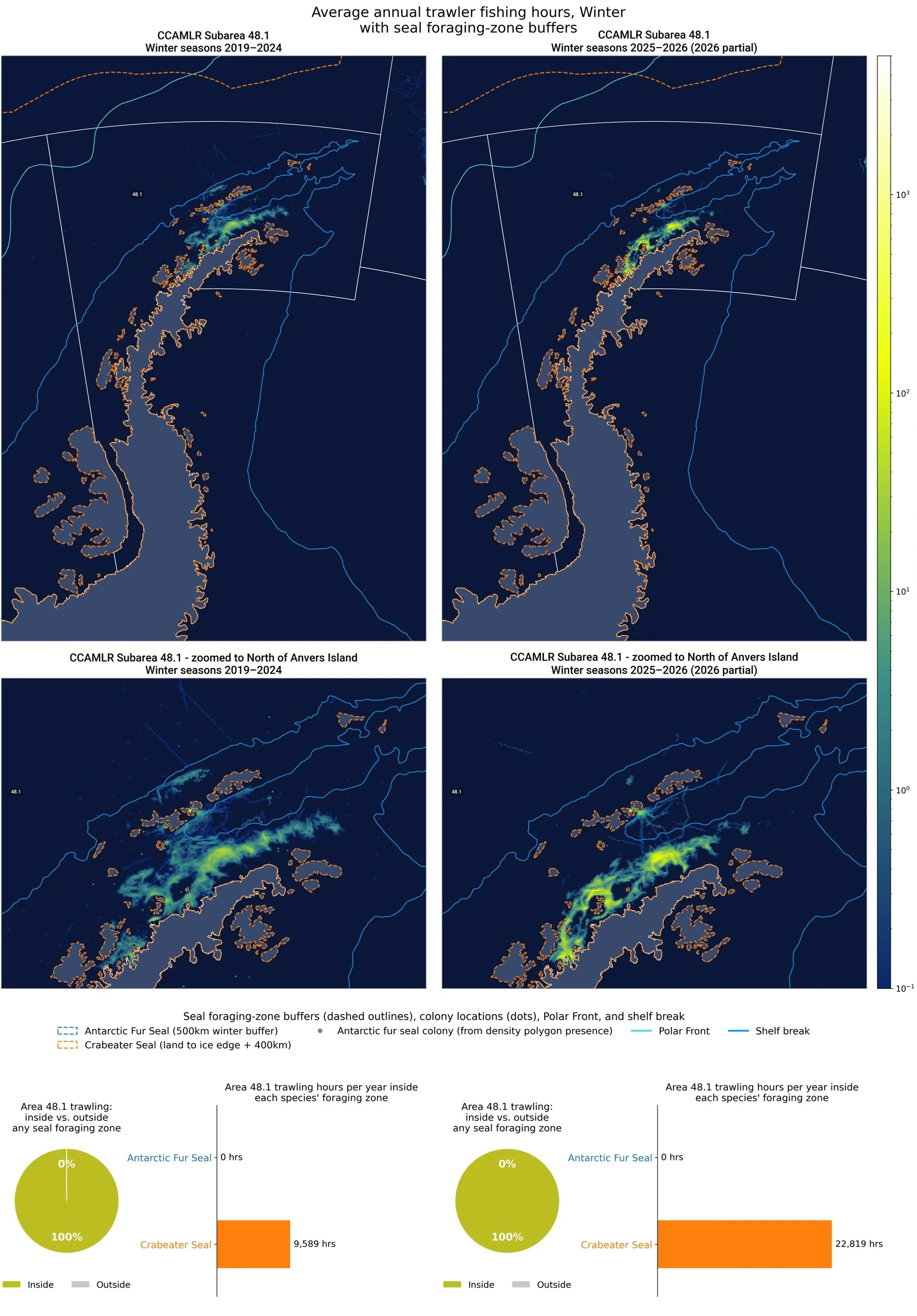
Estimated annual apparent krill fishing hours (green blobs) around crabeater seal foraging areas (orange dashed lines) in CCAMLR Subarea 48.1 in the austral winter, both before and after CM 51-07 lapsed. Dashed outlines show literature-derived potential predator foraging ranges—not observed animal positions. The post-2024 period includes partial 2026 data.
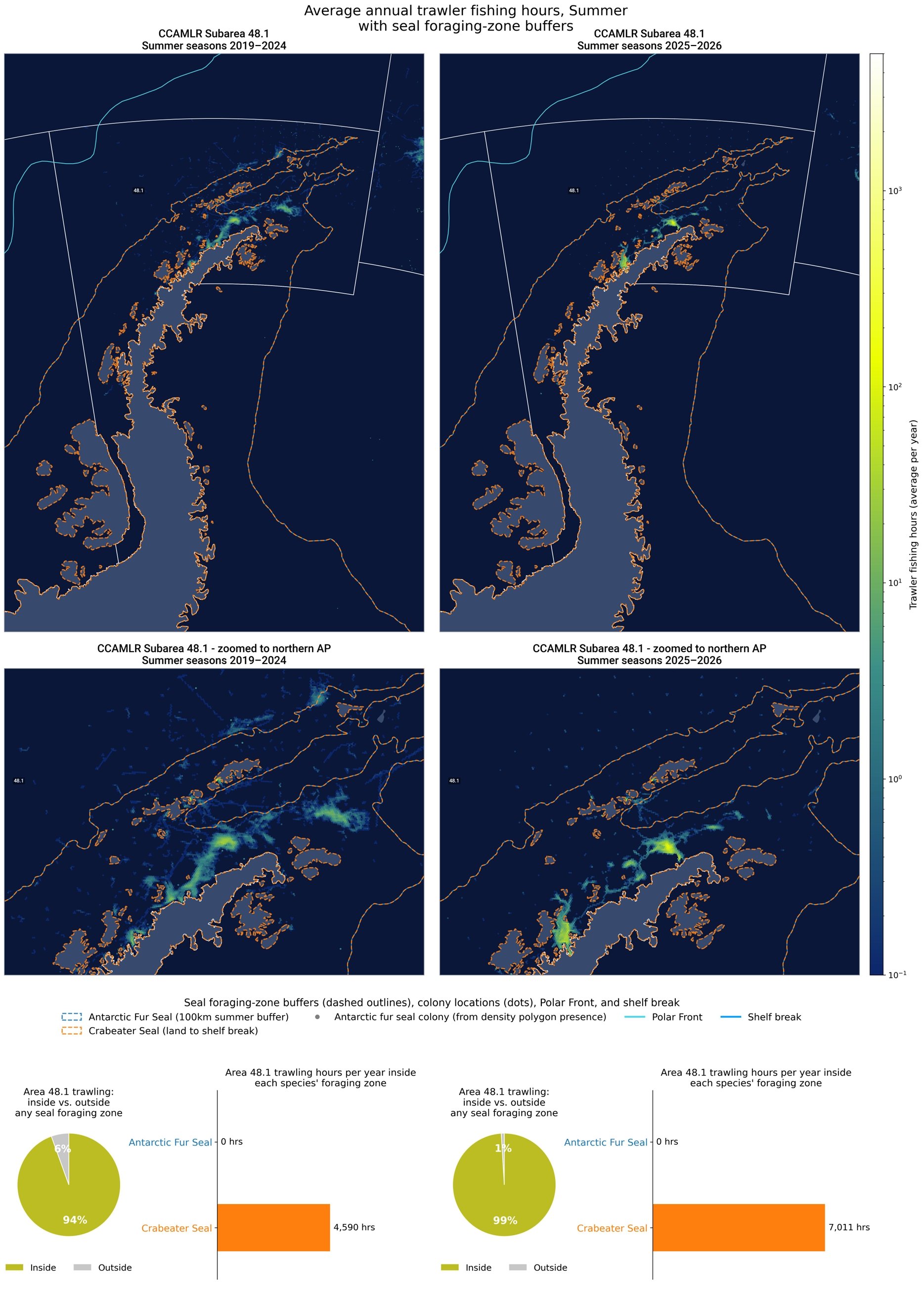
Estimated annual apparent krill fishing hours (green blobs) around crabeater seal foraging areas (orange dashed lines) in CCAMLR Subarea 48.1 in the austral summer, both before and after CM 51-07 lapsed. Dashed outlines show literature-derived potential predator foraging ranges—not observed animal positions. The post-2024 period includes partial 2026 data.
Voluntary Restricted Zones
The industry-led Association of Responsible Krill Harvesting Companies implemented voluntary restricted zones beginning in the 2018-2019 fishing season. This includes a year-round closure around Hope Bay. These zones are intended as a placeholder to safeguard wildlife (particularly breeding penguins) until a sufficient MPA is in place. However, the science and effectiveness behind these VRZs has been questioned by experts, and the ARK VRZ Expert Panel is currently inactive.
Industry-led voluntary restricted zones may reduce certain fishing interactions, but they are not a substitute for binding, independently monitored conservation measures. Global Fishing Watch vessel tracks identify apparent fishing activity within the Hope Bay voluntary restricted zone on several occasions since 2018.Although VRZs are largely adhered to by krill vessels, there have been 5 vessels since 2018 that have fished for krill within the Hope Bay VRZ. The largest infraction seems to have been by Aker QRILL’s Antarctic Sea (IMO 9160358), which appears to have ventured further into the VRZ beyond ‘normal fishing activity’ drifting past the boundary in 2022.
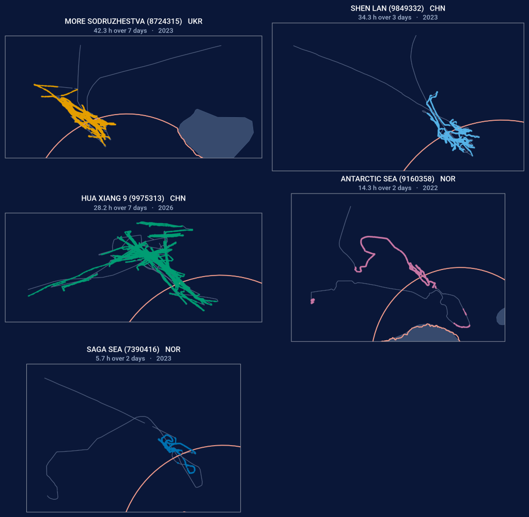
AIS vessel tracks of krill trawlers with apparent fishing activity detected within the Hope Bay VRZ between 2019 and 2026. Colored positions represent identified fishing positions and vessel tracks are visible for one day before/after the date of observed activity within Hope Bay (boundary shown in orange).
METHODS
Global Fishing Watch analyzed the fishing intensity of Antarctic krill fishing vessels from 2019-2024 (when catch was spatially distributed thanks to CM 51-07) and 2025-2026 (after CM 51-07), and created the figures. Fishing hours represent the amount of time vessels appeared to be engaged in fishing activity, based on a convolutional neural network model applied to their AIS tracks (Kroodsma et al. 2018). Antarctic Wildlife Alliance provided predator data. Points represent recently monitored penguin colony locations according to MAPPPD (Humphries et al. 2017). Foraging zones (represented by dashed lines) represent an average ‘longest trip’ per species from a literature review of satellite tag and modeling studies. Penguin and seal foraging zones vary seasonally in summer vs. winter, and can be highly variable depending on environmental factors including oceanographic conditions, prey availability, and individual variation. The literature used to inform the foraging zones is cited below.
CONCLUSION
It’s clear that greater protections for Antarctic wildlife are urgently needed. Penguin colonies are already collapsing due to krill shortages in a warming Antarctic. Antarctic fur seals are now Endangered for the same reason. Wildlife can’t wait any longer- and with krill products being completely unnecessary for humans, they shouldn’t have to.
Ever since spatial distributions expired in 2024, krill fishing intensity has increased around the northern Antarctic Peninsula, with vessels moving away from the South Orkney Islands and South Georgia Islands and heading south toward 48.1 in the austral winter- when most penguin species’ foraging ranges are the longest. Even when spatial distributions were in place, krill vessels spent the majority of active trawling hours within estimated penguin and seal foraging zones.
Our analysis underscores why the lapse of CM 51-07 was so dangerous. Once the spatial catch allocations expired, industrial krill fishing activity intensified in estimated predator feeding grounds around the northern Antarctic Peninsula—precisely the kind of concentrated pressure the conservation measure was intended to help prevent.
CCAMLR must urgently restore precautionary spatial catch restrictions and establish stronger protections for krill-dependent wildlife, including the Domain 1 Marine Protected Area. These are essential steps.
But let’s be clear: one MPA alone will not fully protect hungry penguins, whales, seals and albatross from krill vessels. That is why reducing demand for Antarctic krill is imperative. Krill harvested from wildlife feeding grounds ends up in omega-3 supplements, aquaculture feed, and pet food, including products sold in the United States. Alternatives exist. Retailers, manufacturers, investors, and consumers can help reduce fishing pressure by moving away from Antarctic krill rather than relying on conservation rules alone to make its extraction acceptable. The Antarctic krill fishery is wholly unnecessary and poses an inherent risk to wildlife.
The priority is simple: leave krill in the ocean for the penguins, seals, whales, and other animals that need it to survive.
By creating a comprehensive network of MPAs in the Southern Ocean and re-implementing spatial catch distributions, CCAMLR can ameliorate the burdens that the krill fishery places on Antarctica’s critters. We hope CCAMLR will be successful in this, and we applaud the multitude of dedicated delegates hard at work to make it happen.
COMING UP NEXT
We’re performed the same analyses in areas 48.2 (South Orkney Islands) and 48.3 (South Georgia Islands), which tell a different part of the story. Keep an eye out for AWA’s next blog post!
REFERENCES
1 D. Bahlburg, S. Menze, B.A. Krafft, A.D. Lowther, & B. Meyer, Mapping encounters between Antarctic krill fishing vessels and air-breathing krill predators using acoustic data from the fishery, Proc. Natl. Acad. Sci. U.S.A. 122 (25) e2417203122, https://doi.org/10.1073/pnas.2417203122 (2025).
2 Wienecke, B. C., Lawless, R., Rodary, D., Bost, C. A., Thomson, R., Pauly, T., ... & LeMaho, Y. (2000). Adélie penguin foraging behaviour and krill abundance along the Wilkes and Adélie land coasts, Antarctica. Deep Sea Research Part II: Topical Studies in Oceanography, 47(12-13), 2573-2587.
3Kato, A., Yoshioka, A., & Sato, K. (2009). Foraging behavior of Adélie penguins during incubation period in Lützow-Holm Bay. Polar Biology, 32(2), 181-186.
4 Kerry, K. R., Clarke, J. R., Eberhard, S., Gardner, H., Lawless, R. M., Tremont, R., ... & Thomson, R. (1997). The foraging range of Adélie penguins—implications for CEMP and interactions with the krill fishery. CCAMLR Sci, 4, 75-87.
5. Cottin, M., Raymond, B., Kato, A., Amélineau, F., Le Maho, Y., Raclot, T., ... & Ropert-Coudert, Y. (2012). Foraging strategies of male Adélie penguins during their first incubation trip in relation to environmental conditions. Marine Biology, 159(8), 1843-1852.
6 ARK 2022 Expert Panel report
7 Riaz, J., Bestley, S., Wotherspoon, S. et al. Horizontal-vertical movement relationships: Adelie penguins forage continuously throughout provisioning trips. Mov Ecol 9, 43 (2021). https://doi.org/10.1186/s40462-021-00280-8
8 Thiebot, J. B., Ropert-Coudert, Y., Raclot, T., Poupart, T., Kato, A., & Takahashi, A. (2019). Adélie penguins’ extensive seasonal migration supports dynamic Marine Protected Area planning in Antarctica. Marine Policy, 109, 103692.
9 Takahashi, A., Ito, M., Nagai, K., Thiebot, J. B., Mitamura, H., Noda, T., ... & Watanabe, Y. Y. (2018). Migratory movements and winter diving activity of Adélie penguins in East Antarctica. Marine Ecology Progress Series, 589, 227-239.
11 Robinson, S. A., & Hindell, M. A. (1996). Foraging ecology of gentoo penguins Pygoscelis papua at Macquarie Island during the period of chick care. Ibis, 138(4), 722-731.
12 Wilson, R. P., Nagy, K. A., & Obst, B. S. (1989). Foraging ranges of penguins. Polar Record, 25(155), 303-308.
13 Thiebot, J. B., Lescroël, A., Pinaud, D., Trathan, P. N., & Bost, C. A. (2011). Larger foraging range but similar habitat selection in non-breeding versus breeding sub-Antarctic penguins. Antarctic Science, 23(2), 117-126.
14Trathan, P. N., V. Warwick-Evans, J. T. Hinke, E. F. Young, E. J. Murphy, A. P. B. Carneiro, M. P. Dias, K. M. Kovacs, A. D. Lowther, O. R. Godø, N. Kokubun, J. H. Kim, A. Takahashi, and M. Santos. 2018. Managing fishery development in sensitive ecosystems: identifying penguin habitat use to direct management in Antarctica. Ecosphere 9(8):e02392. 10.1002/ecs2.2392
15 Wilson, R. P., & Peters, G. (1999). The foraging behaviour of Chinstrap penguins Pygoscelis antarctica at Ardley Island, Antarctica. Marine Ornithology, 27, 85-95.
16 Lynnes, A., Reid, K., Croxall, J., & Trathan, P. (2002). Conflict or co-existence? Foraging distribution and competition for prey between Adélie and Chinstrap Penguins. Marine Biology, 141(6), 1165-1174.
17 Warwick‐Evans, V., Ratcliffe, N., Lowther, A. D., Manco, F., Ireland, L., Clewlow, H. L., & Trathan, P. N. (2018). Using habitat models for chinstrap penguins Pygoscelis antarctica to advise krill fisheries management during the penguin breeding season. Diversity and Distributions, 24(12), 1756-1771.
18 Hinke, J. T., Santos, M. M., Korczak-Abshire, M., Milinevsky, G., & Watters, G. M. (2019). Individual variation in migratory movements of chinstrap penguins leads to widespread occupancy of ice-free winter habitats over the continental shelf and deep ocean basins of the Southern Ocean. PLoS One, 14(12), e0226207.
19 Wienecke, B. C., & Robertson, G. (1997). Foraging space of emperor penguins Aptenodytes forsteri in Antarctic shelf waters in winter. Marine Ecology Progress Series, 159, 249-263.
20 Zimmer, I., Wilson, R. P., Gilbert, C., Beaulieu, M., Ancel, A., & Plötz, J. (2008). Foraging movements of emperor penguins at Pointe Géologie, Antarctica. Polar Biology, 31(2), 229-243.
21 Kirkwood, R., & Robertson, G. (1997). The foraging ecology of female emperor penguins in winter. Ecological Monographs, 67(2), 155-176.
22 Rodary, D., Bonneau, W., Le Maho, Y., & Bost, C. A. (2000). Benthic diving in male emperor penguins Aptenodytes forsteri foraging in winter. Marine Ecology Progress Series, 207, 171-181.
23 Labrousse, S., Fraser, A. D., Sumner, M., Tamura, T., Pinaud, D., Wienecke, B., et al. (2019). Dynamic fine-scale sea icescape shapes adult emperor penguin foraging habitat in East Antarctica. Geophysical Research Letters, 46, 11206–11218. https://doi.org/10.1029/2019GL084347
24 Kooyman, G., Hull, C., Olsson, O., Robertson, G., Croxall, J., & Davis, L. S34. 2: Foraging patterns of polar penguins.
25. Scheffer, A., Trathan, P. N., & Collins, M. (2010). Foraging behaviour of king penguins (Aptenodytes patagonicus) in relation to predictable mesoscale oceanographic features in the Polar Front Zone to the north of South Georgia. Progress in Oceanography, 86(1-2), 232-245.
26 Jouventin, P., Capdeville, D., Cuenot-Chaillet, F., & Boiteau, C. (1994). Exploitation of pelagic resources by a non-flying seabird: satellite tracking of the king penguin throughout the breeding cycle. Marine ecology progress series, 11-19.
27 Pütz, K. (2002). Spatial and temporal variability in the foraging areas of breeding king penguins. The Condor, 104(3), 528-538.
30Green, J. A., Wilson, R. P., Boyd, I. L., Woakes, A. J., Green, C. J., & Butler, P. J. (2009). Tracking macaroni penguins during long foraging trips using ‘behavioural geolocation’. Polar biology, 32(4), 645-653.
32 Lowther, A. D. (2018). Antarctic marine mammals. In Encyclopedia of marine mammals (pp. 27-32). Academic Press.
33 Wege, M., Salas, L., & LaRue, M. (2020). Citizen science and habitat modelling facilitates conservation planning for crabeater seals in the Weddell Sea. Diversity and Distributions, 26(10), 1291-1304.
34 Fierro-Arcos, D., Corney, S., Meyer, A., Hayashida, H., Kiss, A., Emmerson, L., ... & Heil, P. (2025). High-resolution ocean sea ice model outputs to predict species distribution: case study of crabeater seal Lobodon carcinophagus in East Antarctica. Marine Ecology Progress Series, 772, 193-214.
35 Hindell, M. A., Reisinger, R. R., Ropert-Coudert, Y., Hückstädt, L. A., Trathan, P. N., Bornemann, H., ... & Raymond, B. (2020). Tracking of marine predators to protect Southern Ocean ecosystems. Nature, 580(7801), 87-92.
36 Lowther, A. D., Staniland, I., Lydersen, C., & Kovacs, K. M. (2020). Male Antarctic fur seals: neglected food competitors of bioindicator species in the context of an increasing Antarctic krill fishery. Scientific Reports, 10(1), 18436.
37 Larsen, G. D., Cimino, M. A., Dale, J., Friedlaender, A. S., Goerke, M. A., & Johnston, D. W. (2025). Terrestrial spatial distribution and summer abundance of Antarctic fur seals (Arctocephalus gazella) near Palmer Station, Antarctica, from drone surveys. Ecology and Evolution, 15(4), e70833.
38 Lowther, A. D. (2018). Antarctic marine mammals. In Encyclopedia of marine mammals (pp. 27-32). Academic Press.
39. Santora, J. A. (2013). Dynamic intra-seasonal habitat use by Antarctic fur seals suggests migratory hotspots near the Antarctic Peninsula. Marine biology, 160(6), 1383-1393.
40 Bamford, C. C., Warwick-Evans, V., Staniland, I. J., Jackson, J. A., & Trathan, P. N. (2021). Wintertime overlaps between female Antarctic fur seals (Arctocephalus gazella) and the krill fishery at South Georgia, South Atlantic. Plos one, 16(3), e0248071.
41 Juarez Martinez, I., Kacelnik, A., Jones, F. M., Hinke, J. T., Dunn, M. J., Raya Rey, A., Lynch, H. J., Owen, K., & Hart, T. (2026). Record phenological responses to climate change in three sympatric penguin species. Journal of Animal Ecology, 95, 455–469. https://doi.org/10.1111/1365-2656.70201
42. Kruger, L., Santa Cruz, F., Marquez, M., Vianna, J. A., Santos, M., Pinones, A., & Cardenas, C. (2026). Lessening the bottleneck: reduced spatiotemporal overlap between krill fishing vessels and post-fledging chinstrap penguins led to increased apparent survival. bioRxiv, 2026-06.
43. Arthur, B., Hindell, M., Bester, M., De Bruyn, P. N., Trathan, P., Goebel, M., & Lea, M. A. (2017). Winter habitat predictions of a key Southern Ocean predator, the Antarctic fur seal (Arctocephalus gazella). Deep Sea Research Part II: Topical Studies in Oceanography, 140, 171-181.