
Article
Why krill matter
Author
Ally Kristan
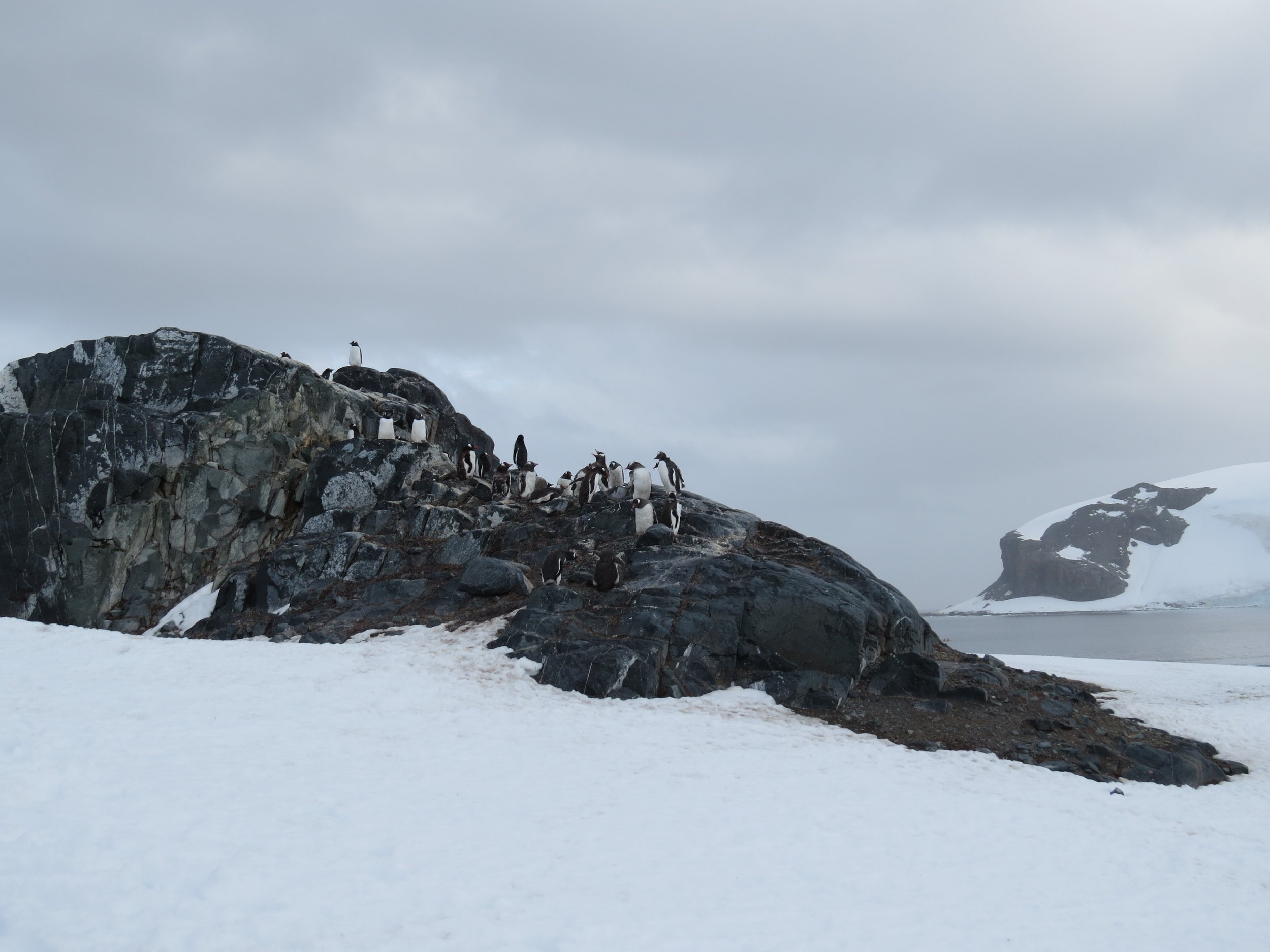
The Southern Ocean ecosystem of Antarctica, one of Earth’s last great wilderness regions, depends entirely upon Antarctic krill (Euphausia superba), a keystone species that sustains penguins, seals and sea lions, whales, albatross, and fish.
What are krill?
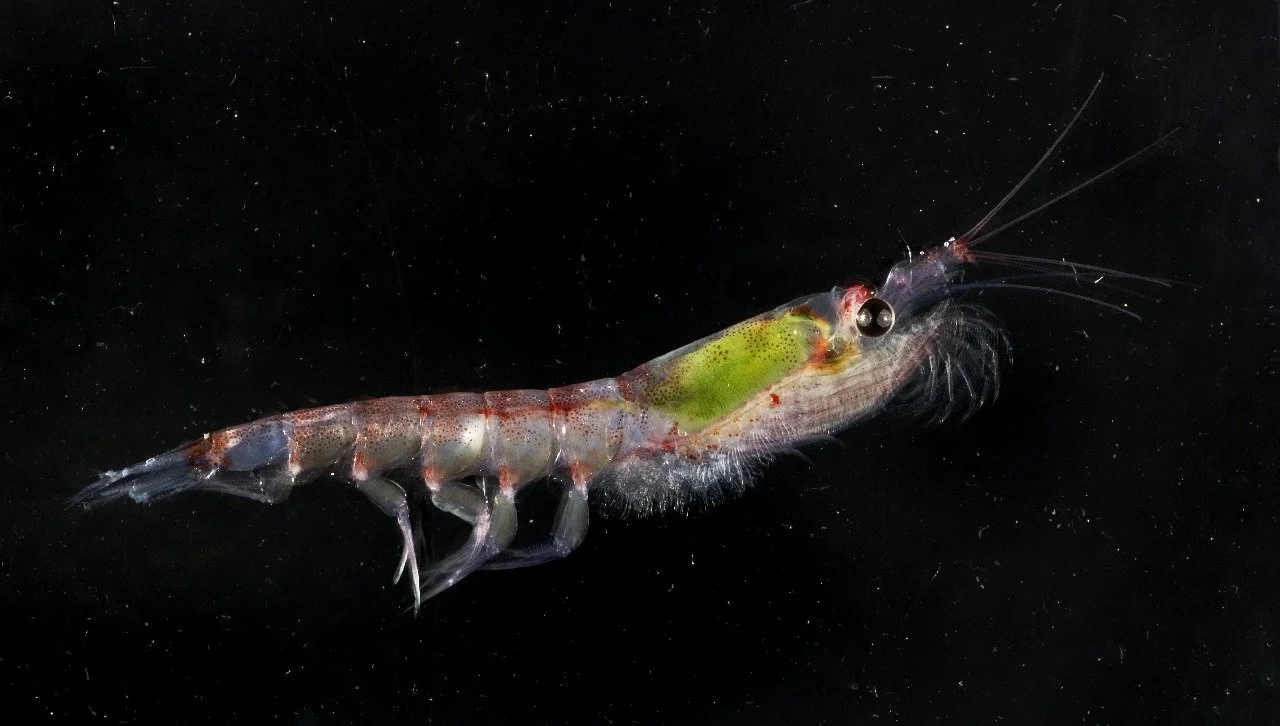
Antarctic krill are a tiny, pinkish, shrimp-like crustacean at the bottom of our planet. At no more than 6cm long but serving as the base of the Southern Ocean food web, krill feed on phytoplankton living in the water. To survive cold, dark winters in the harshest region of the world, they huddle together under sea ice for shelter and to feed off of the algae living on the ice. Because of their dependence on sea ice and cooler waters, krill populations are exceptionally sensitive to changing climate and environmental conditions as Antarctic waters become warmer and more acidic. In fact, we can already see that krill populations are shifting further south and deeper into colder waters, and are declining in some areas. [1,2,3,4,5]
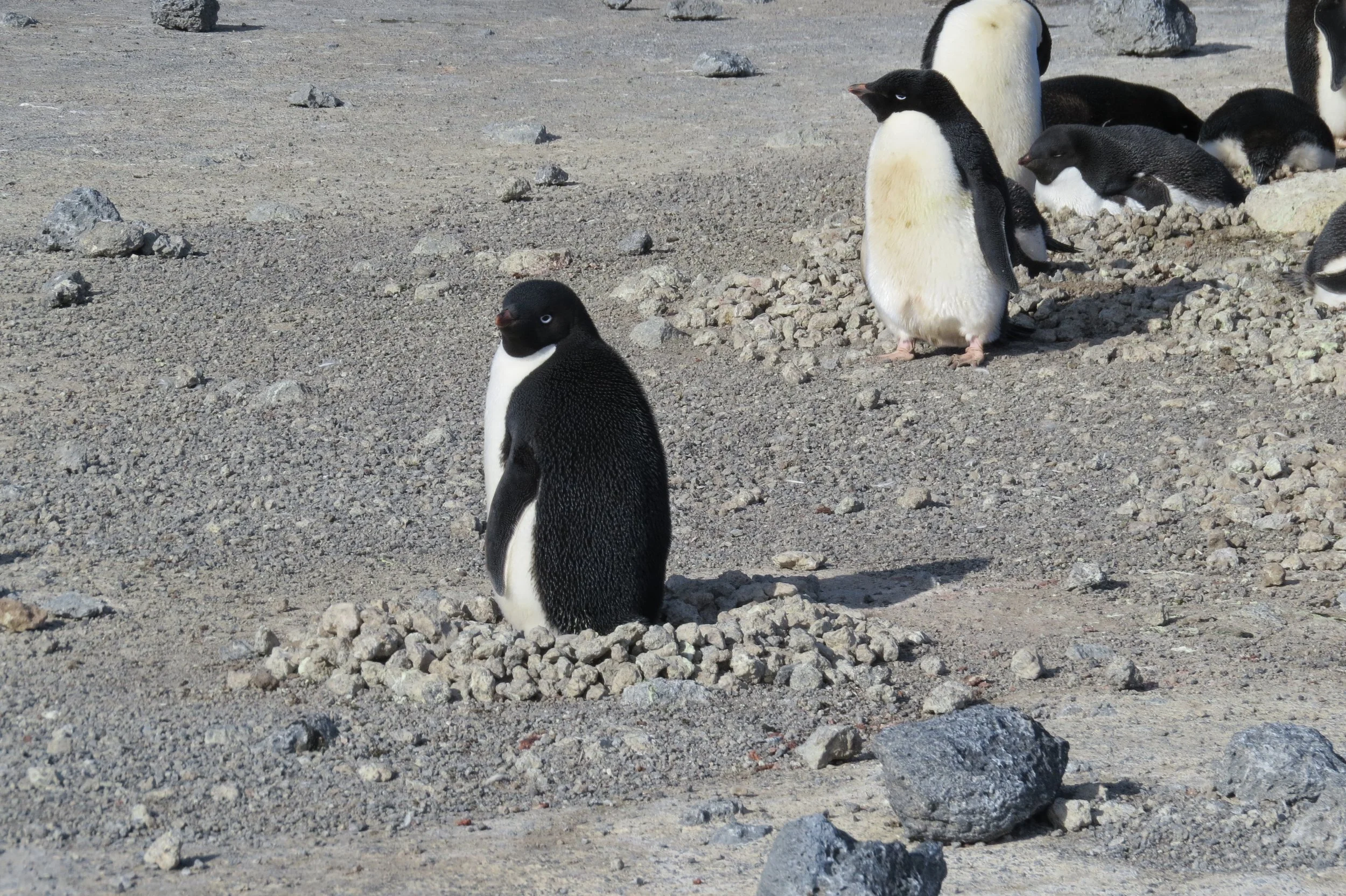
Nearly all Antarctic animals depend on krill for at least part of their diet; the few species who don’t, such as Type B orca whales, feed on penguins and seals that feed on krill. As krill seek colder, deeper, more southerly waters, the animals who depend on them can starve- that is a major contributor to Antarctic Fur Seals’ updated IUCN RedList status to “Endangered” in April 2026. For years, krill shifts and reductions have caused drastic declines in penguin populations, as well. [6] Antarctic krill also help sequester a tremendous amount of carbon in the Southern Ocean- as much as 20 metric tons every single spring-autumn season. [7]
Southern Ocean Wildlife and Krill Fisheries
The Antarctic krill fishery is an industrialized, commercial fishery of floating factories operating in the Southern Ocean. The fishery operates in proximity to wildlife already struggling with climate impacts. The catch can be taken from small, condensed areas that predators depend on, causing a phenomenon called “localized depletion” where a predator’s habitat no longer has enough krill to feed the population.
Many scientists have raised the alarm on the threat that the burgeoning krill fishery poses to Antarctic penguins, [8,9,10,11] whales, [12,13,14] and seals especially when combined with climate impacts. [15] Fishing vessels have been observed fishing amongst groups of actively feeding whales. [16] There are at least 6 documented cases of humpback whales have been caught and killed in krill fishing nets. [17] Bycatch and mortality of other species in krill nets- including penguins, seals and sea lions, petrels, and fishes- does occur. [18,19] However, this information is not wholly and transparently reported on beyond CCAMLR, and is likely underappreciated.
Without healthy krill populations, most Antarctic wildlife cannot survive. It really is that simple.
Video by Pew Charitable Trusts
References
1. Flores, H., Atkinson, A., Kawaguchi, S., Krafft, B. A., Milinevsky, G., Nicol, S., ... & Werner, T. (2012). Impact of climate change on Antarctic krill.Marine Ecology Progress Series, 458, 1-19.
2. Klein, E. S., Hill, S. L., Hinke, J. T., Phillips, T., & Watters, G. M. (2018). Impacts of rising sea temperature on krill increase risks for predators in the Scotia Sea. PloS one, 13(1), e0191011.
3. Kawaguchi, S. Y., Ishida, A., King, R., Raymond, B., Waller, N., Constable, A., ... & Ishimatsu, A. (2013). Risk maps for Antarctic krill under projected Southern Ocean acidification. Nature Climate Change, 3(9), 843-847.
4. Kawaguchi, S., Atkinson, A., Bahlburg, D., Bernard, K. S., Cavan, E. L., Cox, M. J., ... & Veytia, D. (2024). Climate change impacts on Antarctic krill behaviour and population dynamics.Nature Reviews Earth & Environment, 5(1), 43-58.
5. Steinke, K., Bernard, K., Ross, R., and Quetin, L. (2021). Environmental drivers of the physiological condition of mature female Antarctic krill during the spawning season: implications for krill recruitment. Mar. Ecol. Prog. Ser. 669, 65–82. doi: 10.3354/meps13720
6. Lohmann, A. C., Morton, J. P., Schofield, O. M., & Nowacek, D. P. (2023). Cyclical prey shortages for a marine polar predator driven by the interaction of climate change and natural climate variability. Limnology and Oceanography, 68(12), 2668-2687.
7. Cavan, E. L., Mackay, N., Hill, S. L., Atkinson, A., Belcher, A., & Visser, A. (2024). Antarctic krill sequester similar amounts of carbon to key coastal blue carbon habitats. Nature Communications, 15(1), 7842.
8. Krüger, L., Huerta, M. F., Santa Cruz, F., & Cárdenas, C. A. (2021). Antarctic krill fishery effects over penguin populations under adverse climate conditions: Implications for the management of fishing practices. Ambio 50, 560–571 (2021).
9. Watters, G. M., Hinke, J. T., & Reiss, C. S. (2020). Long-term observations from Antarctica demonstrate that mismatched scales of fisheries management and predator-prey interaction lead to erroneous conclusions about precaution.Scientific Reports, 10(1), 2314.
10. Trathan, P. N., Savoca, M. S., Friedlaender, A., Baines, M., Burkhardt, E., Cheeseman, T., ... & Reisinger, R. R. (2024). Integrating the needs of recovering populations of baleen whales into the revised management framework for the commercial fishery for antarctic krill.Frontiers in Marine Science, 11, 1458042.
11. Bahlburg, D., Menze, S., Krafft, B. A., Lowther, A. D., Meyer, B. (2025). Mapping encounters between Antarctic krill fishing vessels and air-breathing krill predators using acoustic data from the fishery. Proceedings of the National Academy of Sciences, 122(25), e2417203122.
12. Pallin, L. J., Kellar, N. M., Steel, D., Botero-Acosta, N., Baker, C. S., Conroy, J. A., Ryan, C., Santangelo, M., Stephenson, B., Branch, T. A., Wilson, E. A., & Savoca, M. S. (2023). Commercial krill fishing within a foraging supergroup of fin whales in the Southern Ocean.Ecology, 104(4), e4002.
13. Savoca, M. S., Kumar, M., Sylvester, Z., Czapanskiy, M. F., Meyer, B., Goldbogen, J. A., & Brooks, C. M. (2024). Whale recovery and the emerging human-wildlife conflict over Antarctic krill.Nature Communications, 15(1), 7708.
14. Costa, D. P., Johnson, C. M., Johnston, D. W., Nichols, R. C., Nowacek, D. P., Read, A. J., Savenko, O., Schofield, O. M., Stammerjohn, S. E., Steinberg, D. K., & Friedlaender, A. S. (2023). A surplus no more? Variation in krill availability impacts reproductive rates of Antarctic baleen whales. Global Change Biology, 29, 2108–2121.
15. Testa, G., Neira, S., Giesecke, R., & Piñones, A. (2022). Projecting environmental and krill fishery impacts on the Antarctic Peninsula food web in 2100.Progress in Oceanography, 206, 102862.
16. Ryan, C., Santangelo, M., Stephenson, B., Branch, T. A., Wilson, E. A., & Savoca, M. S. (2023). Commercial krill fishing within a foraging supergroup of fin whales in the Southern Ocean. Ecology, 104(4), e4002.
17. AP News (2024)
18. Arana, P. M., & Rolleri, R. (2020). Incidental catch of marine organisms registered in the Chilean Antarctic krill fishery, years 2012-2016.Latin american journal of aquatic research, 48(3), 429-439.
19. CCAMLR Fishery Report (2025) Euphasia superba in Area 48.